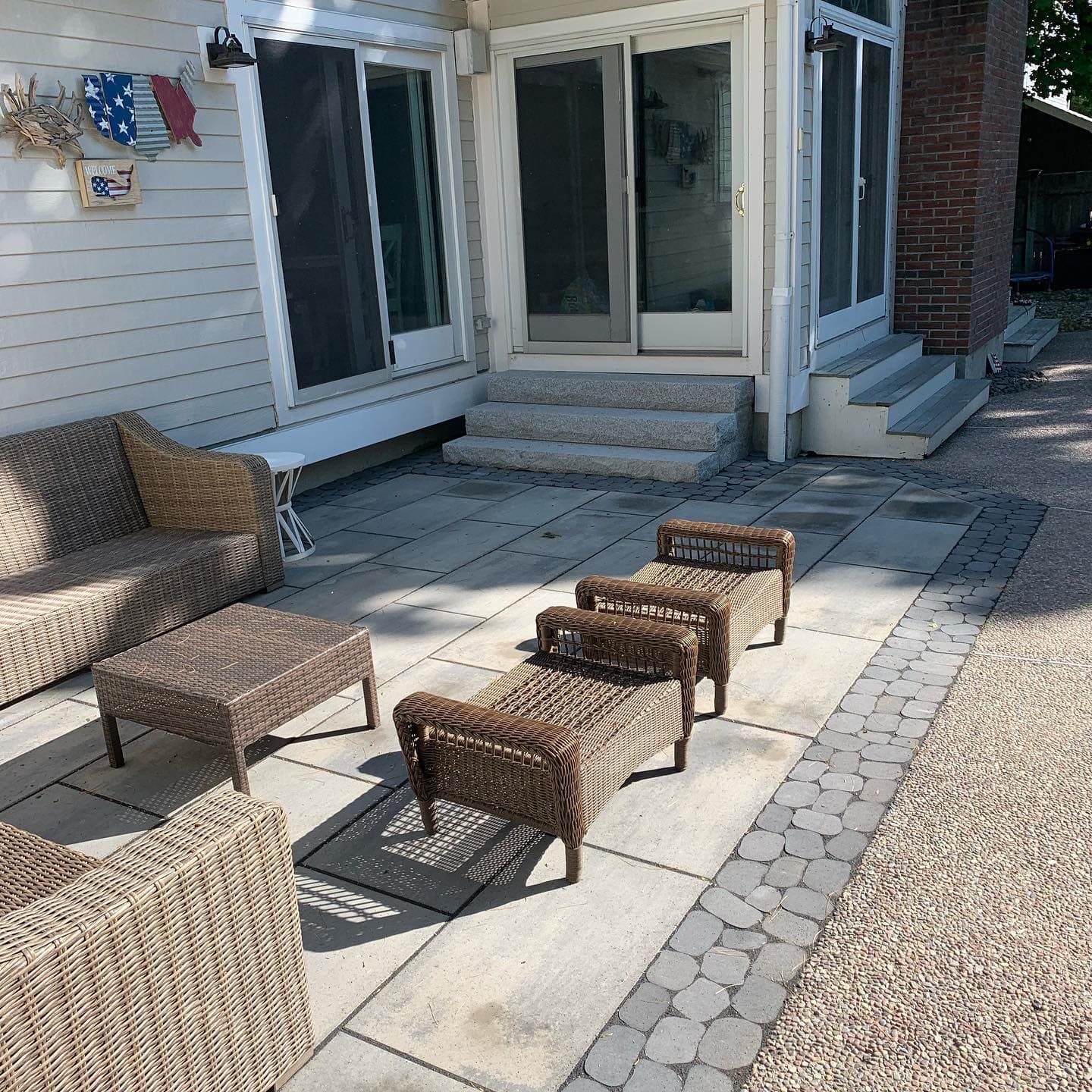
Every spring we get calls about patios that looked fine in October and don’t anymore. A corner has lifted. There’s a dip by the steps that holds a puddle. Pavers have drifted apart at the edge, or a slab of bluestone rocks when you step on it. Almost every time, the surface isn’t the problem. What’s underneath is.
What Frost Heave Actually Is
Water expands when it freezes. When the soil under a patio is wet going into a cold snap, that water freezes, swells and pushes up on whatever is sitting on it. When it thaws, the ground settles back, but rarely in exactly the same place. Repeat that through a New England winter of freezing, thawing and refreezing, and a patio on the wrong base slowly lifts, sinks and shifts.
Heave needs three things: cold, soil that holds water, and water with nowhere to go. We can’t change the weather, so a good build takes away the other two.
The Usual Causes
- Organic soil left in place. Topsoil and roots hold water and keep decomposing, so they settle for years. They have to come out.
- Too thin a base. A couple of inches of stone over soft ground doesn’t spread the load or drain.
- Base not compacted in layers. Dumping all the stone at once and running a compactor over the top only compacts the top. The rest settles later.
- No pitch. A dead-flat patio lets water sit on it and soak into the joints and base.
- Water from somewhere else. Downspouts dumping at the patio edge, or a yard that slopes toward the house, keep the base soaked.
- No edge restraint. Without a locked edge, the outer pavers creep outward and the field loosens.
What a Proper Build Looks Like
There’s nothing exotic about building a patio that stays flat. It’s about not skipping steps you can’t see once it’s finished:
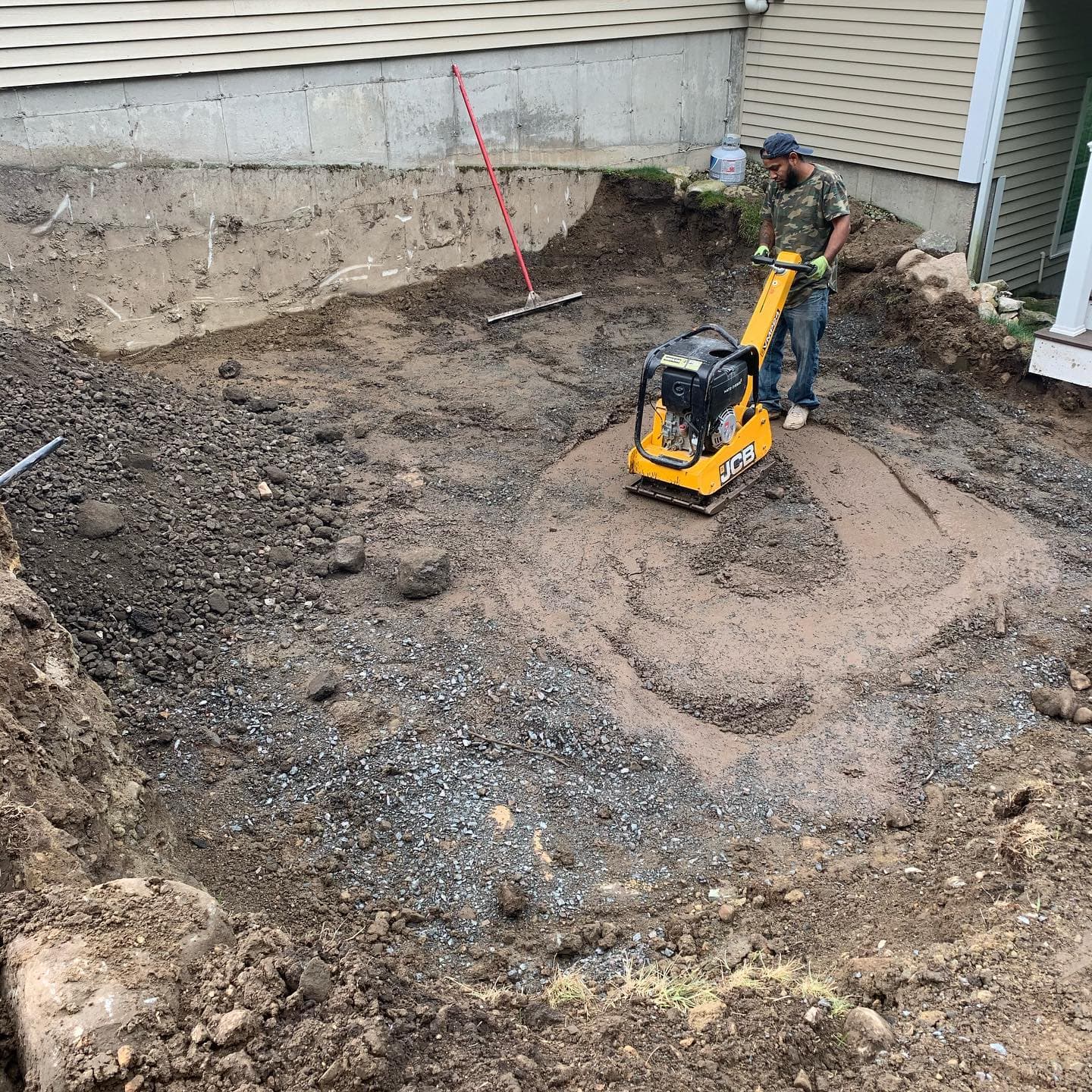
- Dig out. Remove the topsoil and organic material down to firm subsoil. The depth depends on the soil and how the patio will be used, and a driveway or a spot for a hot tub needs more than a walkway.
- Fabric where needed. Over clay or soft ground, geotextile fabric keeps the base stone from sinking into the soil.
- Crushed-stone base, compacted in lifts. The base goes in a few inches at a time, with each layer compacted before the next.
- Pitch it. A slight slope away from the house, so water runs off the surface instead of into the base.
- Bedding layer and pavers. A thin, screeded layer the pavers set into, then the pavers themselves, compacted into place.
- Lock the edges and joints. Edge restraint around the perimeter and joint sand swept in to lock the field together.
On the North Shore, we also plan for what’s under the yard: ledge that changes how deep we can dig, clay that holds water, and older lots where fill was dumped decades ago.
Handle the Water
A lot of heave problems are really drainage problems. Before the patio goes in, look at where the water goes:
- Downspouts should be extended or piped away from the patio, not emptying onto it.
- If the yard slopes toward the house, the grade or a drain may need to change.
- Low spots that hold water after rain need to be dealt with before the base goes in.
When a site has real drainage issues, we’ll say so and include the fix in the plan. More on drainage.
Already Have a Heaving Patio?
Paver patios can usually be fixed without starting over. The affected area is lifted, the base underneath is dug out and rebuilt properly, and the same pavers go back down. Mortared stone on a cracked slab is a bigger job, since the slab is often the problem.
If your patio came through the winter worse than it went in, call us for a look. And if you’re planning a new one, see how we build patios. The base is the part we never cut corners on.