A lot of North Shore backyards can’t fit a full-size pool, and plenty of people who could fit one don’t really want to give up the whole yard for it. That’s where a plunge pool comes in. It’s a small pool built for cooling off and soaking, not swimming laps. If that sounds like how you’d actually use a pool, it’s worth a look.
What a Plunge Pool Is (and Isn’t)
A plunge pool is compact: big enough to get in, cool off, sit and talk, and small enough to leave room for a patio, a grill and some lawn. It isn’t built for laps or big pool parties. If swimming for exercise is the goal, a full-size pool is still the right answer.
Good fits for a plunge pool:
- Smaller lots and yards with limited flat space.
- People who mostly want to cool off on hot afternoons and relax in the evening.
- Families who want a pool and a patio and a bit of grass, not just a pool.
- Anyone who wants less water to heat, filter and keep clean.
Measure the Yard You Actually Have
The pool is only part of the footprint. Before picking a size, account for:
- Decking around the pool so you can walk and set a chair down on every side you’ll use.
- Setbacks from property lines, the house, septic systems and wetlands. These vary by town.
- Equipment: the pump and filter need a level pad and a way for power to reach them.
- Access for excavation equipment to get into the backyard.
- Sun and trees: afternoon sun keeps the water warmer, and fewer overhead branches means less cleaning.
Ledge is common around here. If there’s rock close to the surface, it changes the dig, so it’s one of the first things we look for on a site visit.
Designing It Online
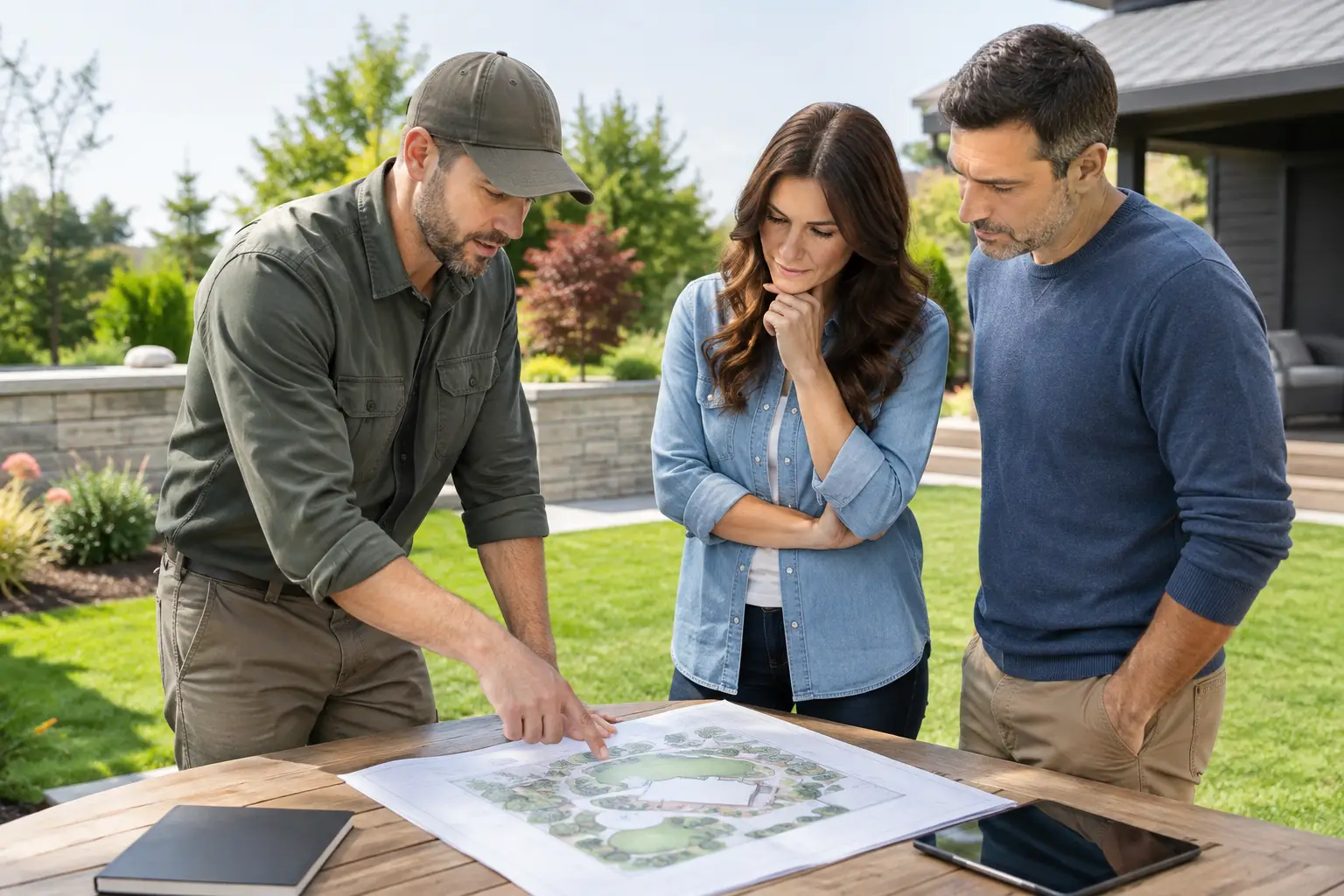
The plunge pools we install are configured online: you pick the shape, size and finish in the designer, then send the design to us. We come out, measure the yard, and quote the whole project, including the pool, excavation, deck, fencing and plantings, so you know the full picture, not just the pool. Details on the designer are on our plunge pools page.
Everything Around the Pool
A pool dropped into a lawn looks unfinished. What makes a backyard pool feel right is what goes around it:
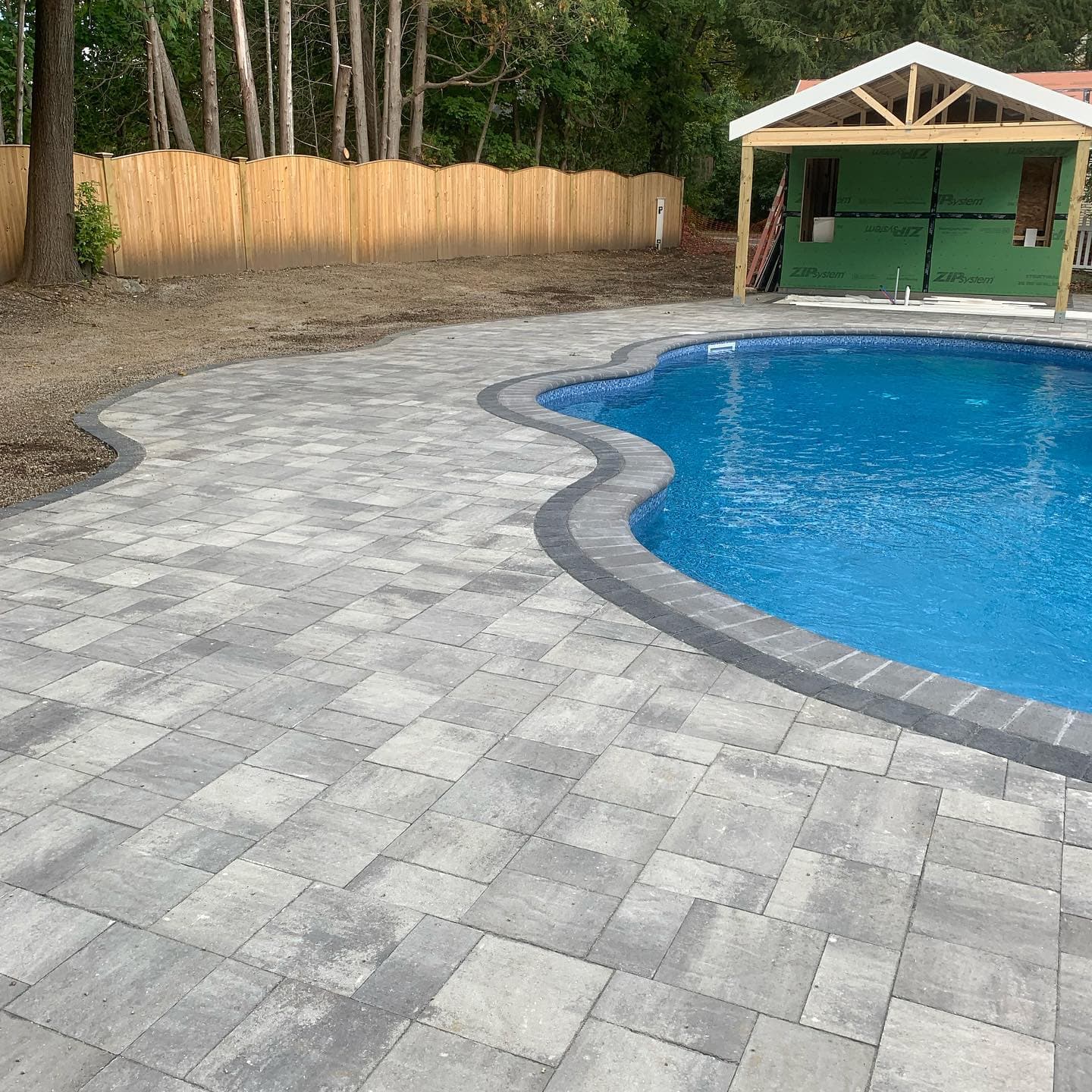
- Deck and coping: pavers or stone with bullnose coping at the edge, laid on a compacted base so it stays level.
- Fencing and gates: Massachusetts requires a safety barrier around pools, and your town’s building department will check it. Self-closing, self-latching gates are part of that.
- Walls and grading if the yard slopes, so the pool sits level and water drains away from it.
- Plantings for privacy and to soften the edges.
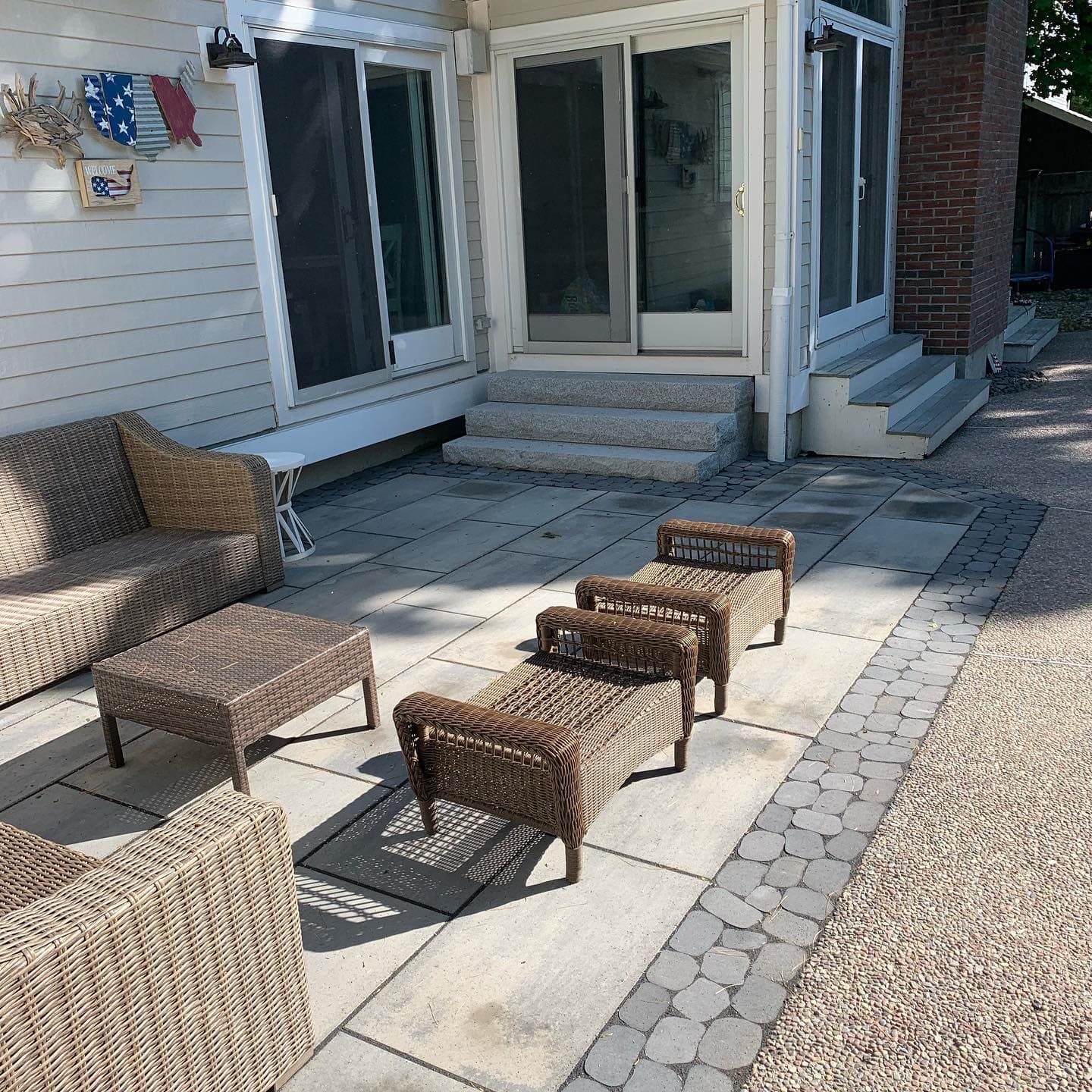
- A patio or outdoor kitchen nearby, because the lounge chairs and the grill need somewhere to go.
Permits
Pools generally need a building permit, and electrical work for the equipment needs its own. Some lots also need sign-off from the conservation commission if they’re near wetlands. We’ll tell you on the first visit what your town is likely to require, so it doesn’t hold up the schedule later.
Already Have a Pool?
If you have a pool and the deck around it is tired, cracked or heaving, you don’t need a new pool to get a new backyard. We tear out old brick and concrete and rebuild the deck and coping in pavers. See our pool deck work.
Thinking about a plunge pool? Call for a free site visit and we’ll tell you what fits, what’s involved, and what it would take in your yard.